Subtitle One
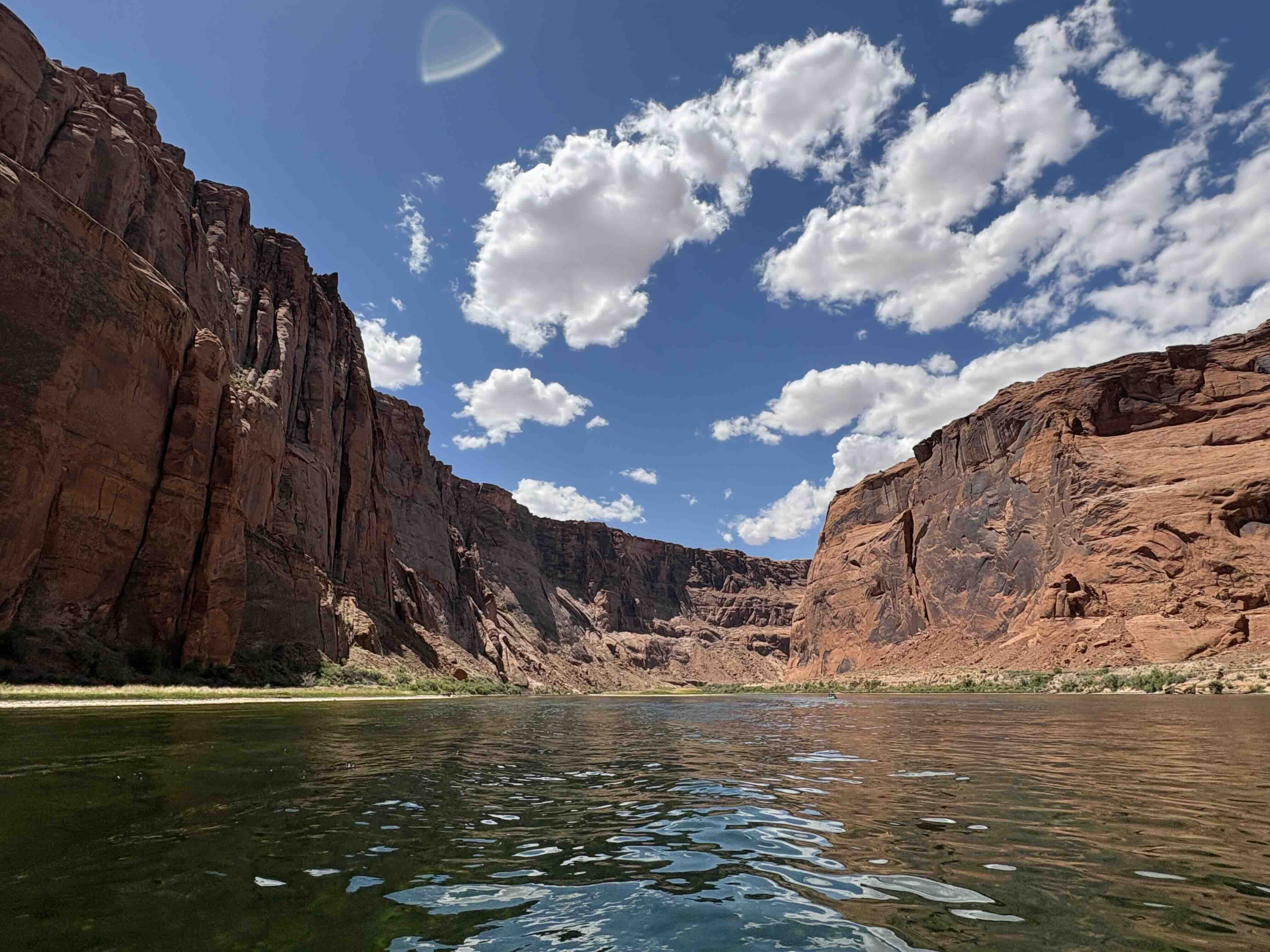
Even sprinkled with modern cities, roads and bridges, the Colorado Plateau appears mostly empty, even today. A jumble of windswept rocks and canyons, it is all at once beautiful, inspiring, desolate. Harsh by day, soft at sunset, mysterious at night. Except for the occasional contrail of a high-flying jet, there is little to suggest any sense of time among the canyons, until one stumbles upon an unmaintained dirt road, maybe a disintegrating wooden fence. And of course, out along Highway 89 near Page, there stands the modern monument to it all: Glen Canyon Dam. A thousand years ago, the mysterious Anasazi called this home. From protected caves, treacherous cliff dwellings, and near the few lush springs hidden among the rocky canyons, they made a deal with the land. They’d take what they could, didn’t ask for more, and carved out a tough life. They lived this way for hundreds of years, literally on the edge of existence. And then they were gone. Moved out. Modern archaeologists will give you a lot of reasons. Climate change. Maybe just a short dry spell. Competition. But none of them are entirely certain, except for one thing: they were no longer there. The land did them in somehow. They must have broken the promise they made.
Still, most agree they are not really dead at all, but have resurfaced as the Hopi, modern pueblo Indians that share many of the characteristics of the Anasazi, though the Hopi now congregate on reservations far south and east of the ancient land of their ancestors. Even the name “Anasazi” is fading away. Now known to politically-minded professionals by the perhaps more accurate but awkward-sounding mouthful “Ancestral Puebloans”, the lost tribe has acquired a name that is twice as long, half as elegant, and no less confusing. There are no more Anasazi to ask which they would prefer. Just their ghosts among the rocks, art on the walls, and the stories told both by their fragmented descendants, and the modern stewards of the land on which they one lived—the Navajo, the Ute, and the Mormons. The Anasazi were not the first people here. And once they were gone some 700 years ago, they would certainly not be the last.
Subtitle Two
The Spanish were next, first a few soldiers spooked from the rim of the Grand Canyon under the direction of Coronado in 1540, who pronounced the area worthless, uninhabitable. It took 200 more years for them to get the nerve to return. When they found there were still souls to be saved in these canyons, Catholic missionaries took the idea of colonization more seriously. Fathers Escalante and Dominguez left their marks on the land in 1776, on a difficult journey from Santa Fe to Monterey. But they didn’t stay, of course, leaving the land to whatever changes the shifting native tribes sought to make for themselves.
The water seekers, the Bureau of Reclamation and the thirsty states of the west, saw a land to be conquered, and they made their plans to do just that. The cities of Los Angeles, Phoenix, and Las Vegas grew around that vision, and around the reservoirs they created. Uranium miners came and went in the 1950s, taking advantage of the geopolitical tides washing over them in the form of the Cold War. A few desert rats, artists, and later recreationists clung to the edges of it all and called this home, fueled by the stories of simpler times told by historians and archaeologists. Ironically, these tales may never have been told had it not been for the dam builders who hired them to do just that. The modern environmentalists surfaced in the wake of all of them, lamenting something that few of them ever saw, most just imagined, and none will ever see again.
Subtitle 3
Apart from the Mormons, perhaps the Navajo are the most recognizable recent transplants to the land, replacing the niche once filled by the Anasazi, the “enemies of our ancestors”, a loose translation of that word from their own language to describe their relationship to the ancient peoples whose ruins and petroglyphs they now see everyday. But they live a tough existence here today, among ramshackle towns, communicating by intermittent cell phone service and decaying Ford F-150 pick-up trucks, as they fight the enemies of unemployment, lack of education, and alcoholism in the face of declining opportunity.
References & Citations
- Doe, J., et al. (2007). "sample citation." Geophysical Research Letters, 34(10).
- Stockton, C. W., & Jacoby, G. C. (1976). "Long-term fluctuations in the Colorado River reconstructed from tree rings." Lake Powell Research Project Bulletin, No. 21.
Excellent summary of the Stockton & Jacoby reconstructions. It is worth noting that even in the 1920s, some hydrologists like Eugene Clyde LaRue warned that the river's flows were over-estimated. His warnings were unfortunately sidelined by commissioners eager for a political consensus.
This structural deficit is the elephant in the room for the upcoming 2026 operating guidelines negotiations. We cannot engineer our way out of a mathematical impossibility.