Field Journals & Logs
Decades of direct observations, explorer logs, and photographic monitoring of Glen Canyon's side channels.
September Expedition to Cathedral in the Desert
Observations: Navigated Clear Creek by canoe. Silt levels at the entrance of the cathedral dome are growing, now averaging 4 feet of fine mud sediment. The inner chamber remains damp, with the waterfall still flowing clean sandstone-filtered water from the Escalante plateau above.
Notes: Explored the narrow upper slots of Clear Creek. Silt deposit lines on canyon walls show the high water mark from the 1983 flood period. The vegetation (principally maidenhair fern and monkeyflower) is slowly recovering along the drip lines above the active pool.
Solitary Exploration of Coyote Gulch
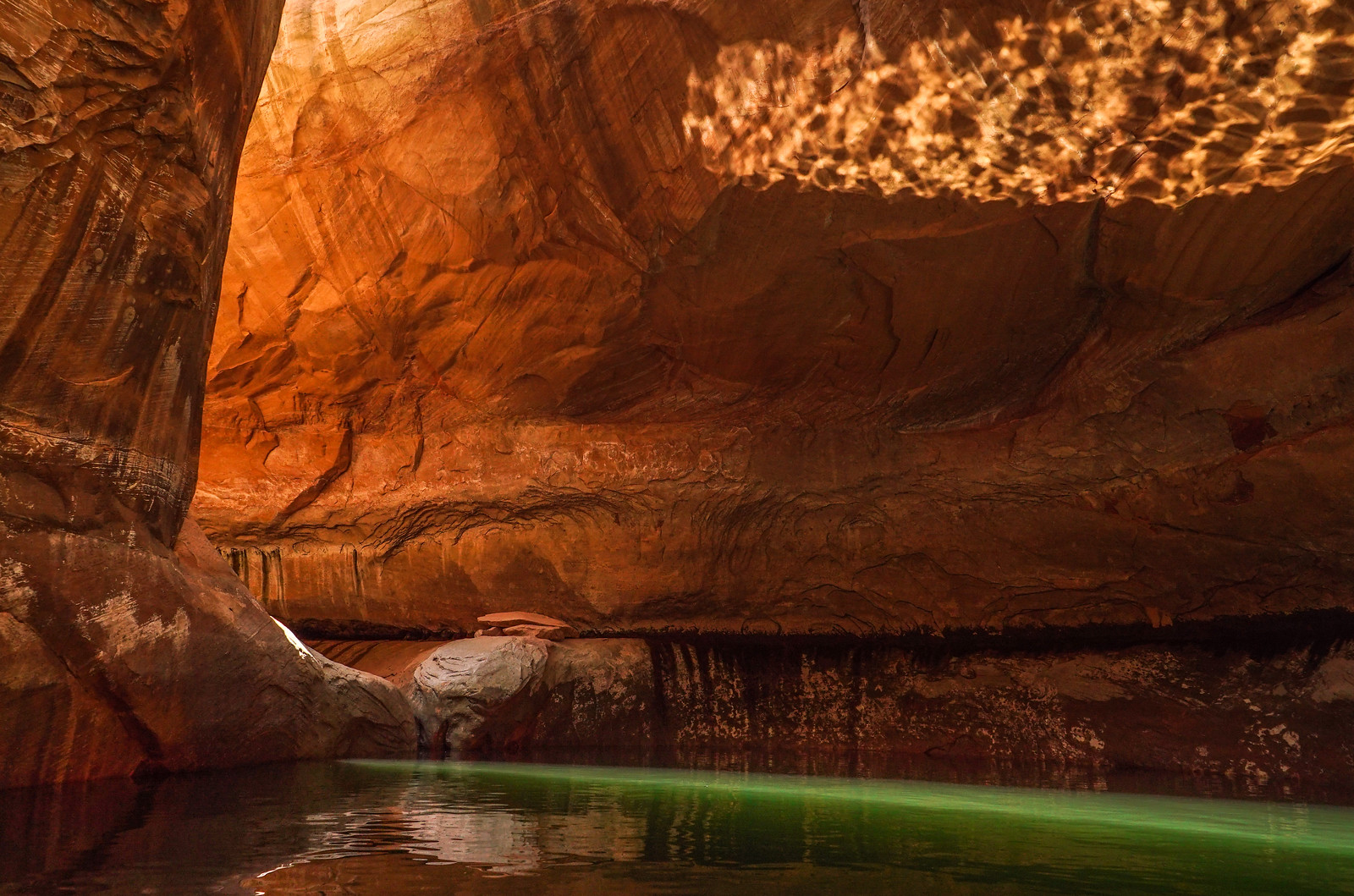
Observations: Hiked from Hurricane Wash down to the Coyote Gulch main channel. The spring-fed stream is running clear. Observed nesting peregrine falcons on the sheer sandstone cliffs near Jacob Hamblin Arch. Minimal human impact noted compared to the previous spring.
Notes: The water line of the reservoir sits far below the gulch entrance. Documented three pre-Columbian Fremont culture granaries along the high sandstone benches, taking careful photographic coordinates for the archaeology department at Salt Lake City.
High Water Survey of Gregory Natural Bridge
Observations: The reservoir is exceptionally full this autumn. Navigated directly under Gregory Natural Bridge via a small motorboat. The top of the bridge's arch is only 15 feet above the water level, hiding the massive scale of the span. The base of the bridge is completely submerged under more than 100 feet of reservoir water.
Notes: The acoustic properties inside the half-submerged canyon are eerie. The sandstone walls exhibit a dark bathtub ring of calcified mineral deposits, which will remain visible if the water levels drop in the future.
Labyrinth Slot Canyon Kayak Survey
Observations: Kayaked the narrow slot coordinates of Labyrinth Canyon. The high water fills the slot walls to a depth of 40 feet, allowing a floating transit where early explorers once walked between narrow boulders. The air temperature drops by 20 degrees inside the deep slots.
Notes: Documented water temperature gradients inside the slot. Deep water is 58°F, while the shallow surface is 74°F. Observed green sunfish and carp swimming in the submerged slot corridors.
Hite Delta Sediment & Channel Monitoring
Observations: A dry season has caused Lake Powell to begin receding. At the Hite Crossing, the Colorado River is beginning to cut a new channel through the thick sediment delta that accumulated during the high water years of the late 90s. The water is highly turbid, carrying a heavy load of reddish silt.
Notes: Measured the depth of the sediment banks at Hite, finding them to be between 20 and 45 feet deep. These muddy banks are highly unstable and pose a hazard to navigation. A new cottonwood forest is beginning to sprout on the exposed silt flats.